Water Filtering Technologies

Water purification is the process of removing undesirable chemicals, materials, and biological contaminants from raw water. The goal is to produce water fit for a specific purpose. Most water is purified for human consumption (drinking water) but water purification may also be designed for a variety of other purposes, including meeting the requirements of medical, pharmacology, chemical and industrial applications. In general the methods used include physical process such as filtration and sedimentation, biological processes such as slow sand filters or activated sludge, chemical process such as flocculation and chlorination and the use of electromagnetic radiation such as ultraviolet light.

The purification process of water may reduce the concentration of particulate matter including suspended particles, parasites, bacteria, algae, viruses, fungi; and a range of dissolved and particulate material derived from the surfaces that water may have made contact with after falling as rain.

Reverse Osmosis

Reverse osmosis is a liquid filtration method. For removes many types of large atomic molecules from smaller molecules, by forcing the liquid at high pressure through a membrane with pores (holes) just big enough to allow the small molecules to pass through.

It is most commonly known for its use in drinking water purification from seawater, removing the salt and other substances from the water molecules. However, the process is also used for filtering many other types of liquids.

The process is similar to membrane filtration. However there are key differences between reverse osmosis and filtration. The predominant removal mechanism in membrane filtration is straining, or size exclusion, so the process can theoretically achieve perfect exclusion of particles regardless of operational parameters such as influent pressure and concentration. RO (Reverse Osmosis), however involves a diffusive mechanism so that separation efficiency is dependent on influent solute concentration, pressure and water flux rate.[1] It works by using pressure to force a solution through a membrane, retaining the solute on one side and allowing the pure solvent to pass to the other side. This is the reverse of the normal osmosis process, which is the natural movement of solvent from an area of low solute concentration, through a membrane, to an area of high solute concentration when no external pressure is applied.

How to make your water safe

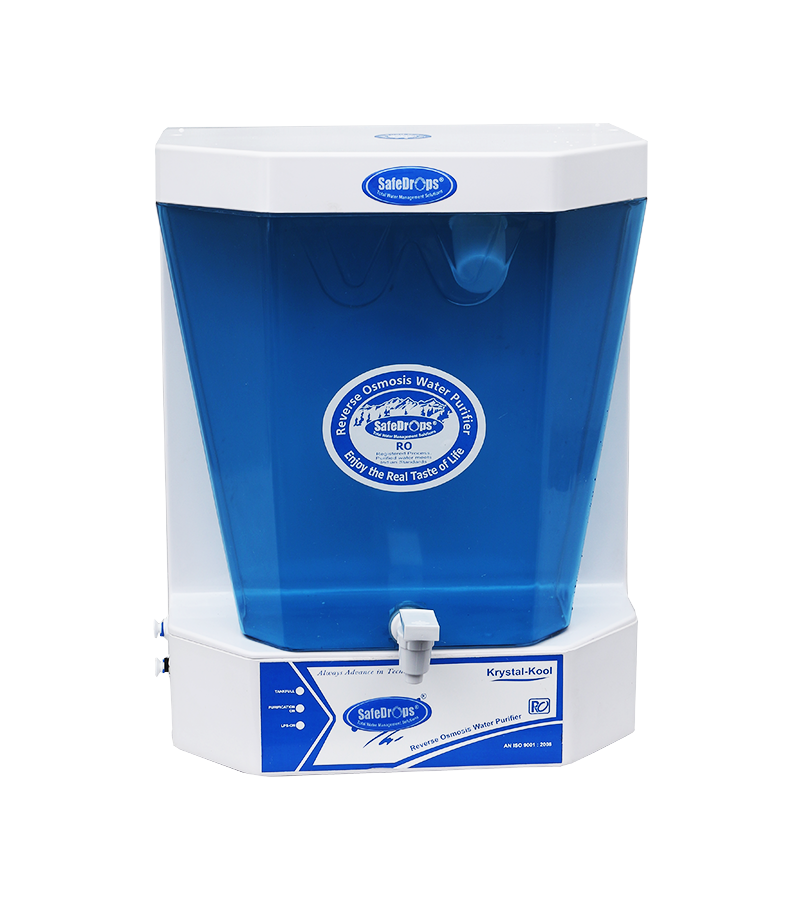
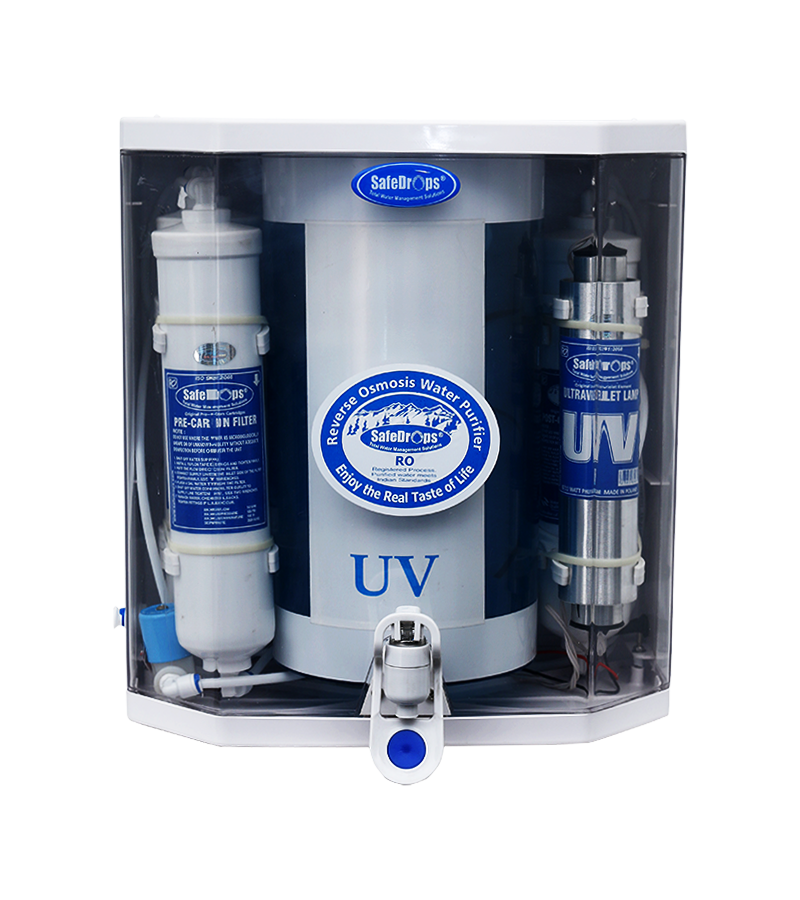
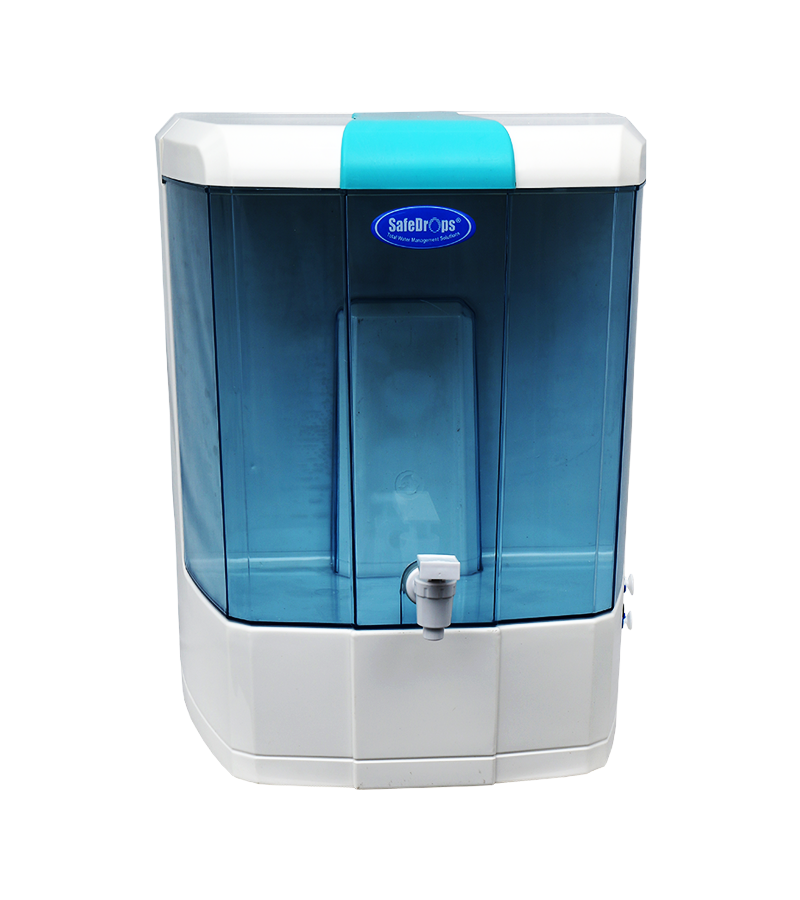
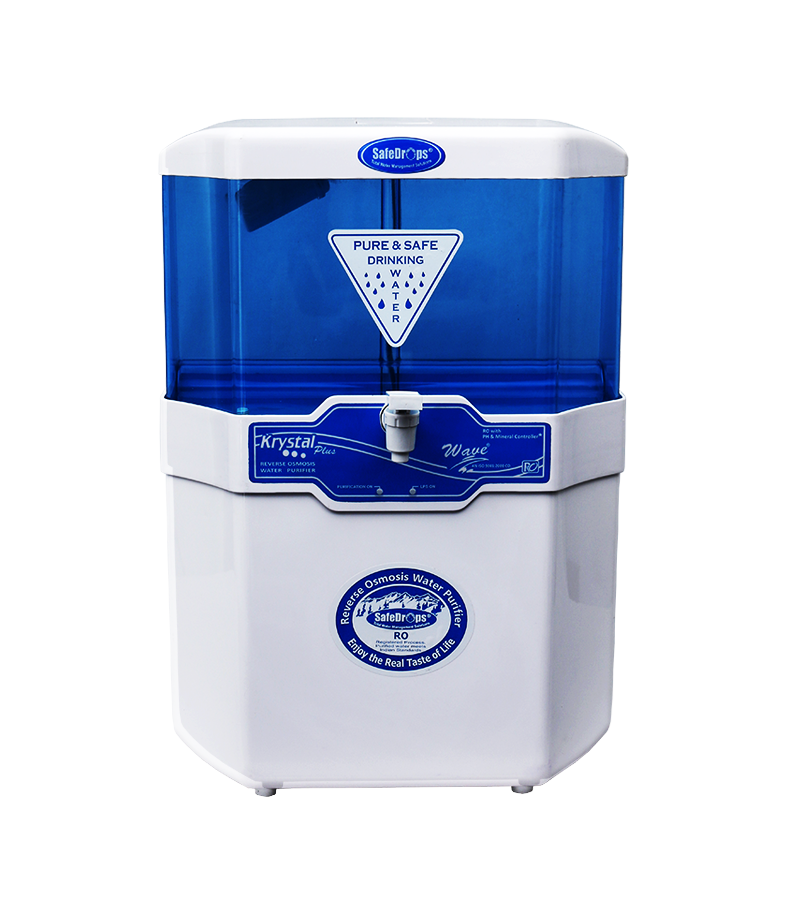
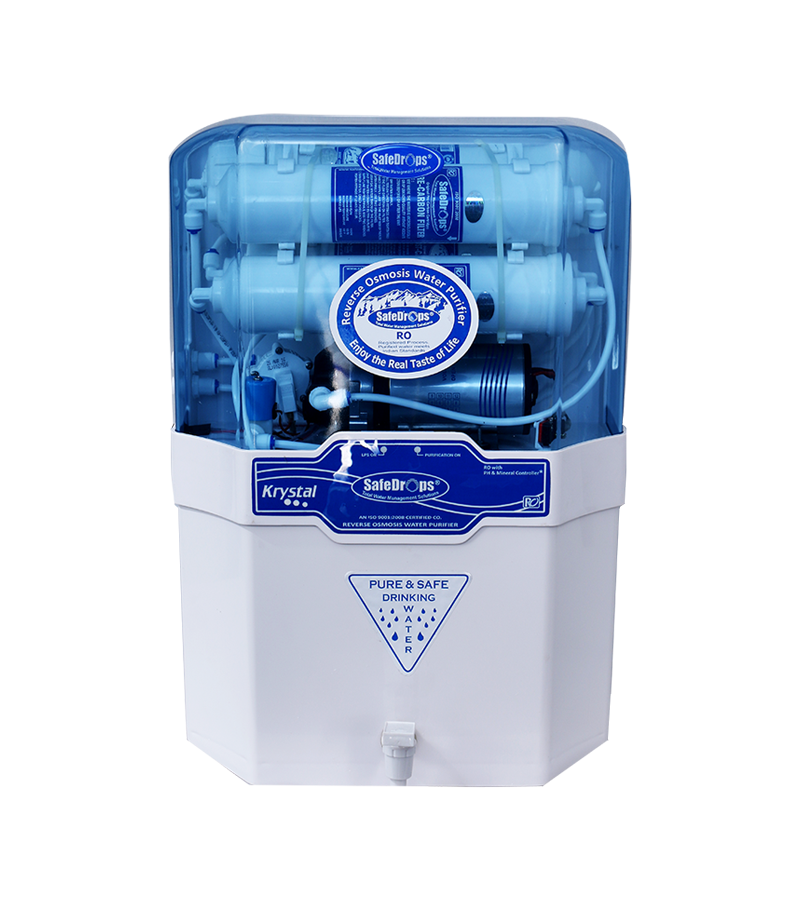
SafeDrops proudly presents water purifiers which removes even dissolved impurities while retaining essential minerals.

Now, every drop will be 100% Pure & Sweat and

  • Free from bacteria and viruses
  • Free from dissolved impurities like salt, rust and heavy metals
  • will have essential natural minerals too